Real Estate: The Foundation of African Tourism, Hospitality & Travel
 Nestova Homes
Nestova Property | Real Estate Intelligence
Real Estate: The Foundation of African Tourism, Hospitality & Travel
Lessons from the Africa Legacy Summit & Eko Hotels' 50 Years of Building Africa's Hospitality Future
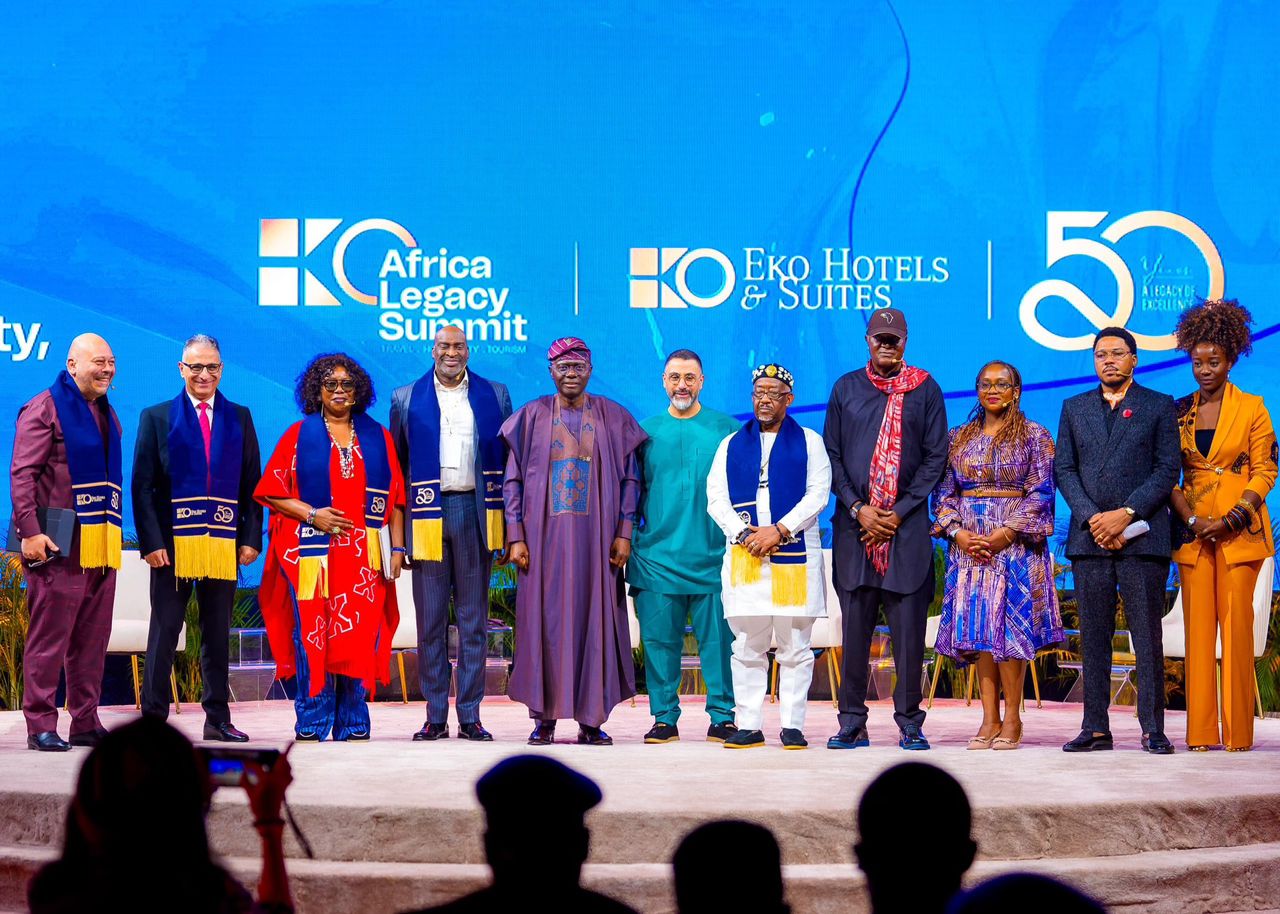
In May 2026, Lagos became the epicentre of a continent-wide conversation that has been long overdue. The Africa Legacy Summit, held to mark the 50th anniversary of Eko Hotels & Suites, brought together policymakers, diplomats, investors, tourism executives, cultural leaders, and young innovators under one defining theme: "Reimagining the Future of Culture in African Hospitality, Tourism and Travel."
But beneath the celebration of five decades of world-class hospitality, beneath the cultural performances, the keynote speeches, and the bold declarations about Africa's tourism potential, one foundational truth emerged with undeniable clarity — none of it is possible without real estate.
Every hotel. Every resort. Every cultural centre. Every airport corridor. Every road that leads a tourist to a destination. Every beachfront villa, safari lodge, and heritage museum. They all start from one place — land.
"Tourism is not a soft structure. It's a hard economy that creates job opportunities that cannot be exported."
— Governor Babajide Sanwo-Olu, Africa Legacy Summit 2026
What the Africa Legacy Summit Revealed About African Tourism
The two-day summit, held on May 15–16, 2026, at Eko Hotels & Suites on the Lagos waterfront, was not a routine corporate anniversary. It was a declaration. Delegates from across Africa and the Caribbean converged to grapple with a central challenge: despite Africa's breathtaking natural landscapes, extraordinary cultural heritage, and a young, dynamic population, the continent still captures only a small fraction of global tourist arrivals.
Industry stakeholders at the summit identified the key barriers — infrastructure deficits, fragmented visa policies, inconsistent destination branding, and security perceptions. But running beneath all of these challenges is a deeper structural problem that rarely gets named directly: Africa's tourism sector is underleveraged because its real estate foundation is underdeveloped.
Chairman of the Board of Eko Hotels, Christopher Chagoury, emphasised the importance of preserving African culture against globalisation's diluting pressures. Pan-Africanist Ambassador Wallace Williams pointed to Eko Hotels itself as proof of Africa's capacity to sustain world-class institutions. And Managing Director Ghassan Faddoul reminded the gathering that the future requires both innovation and a rootedness in African identity — a future that can only be built, literally, on solid ground.
Real Estate: The Invisible Engine Powering Tourism
When most people think of tourism, they imagine adventure, culture, relaxation, and discovery. What they rarely see is the complex, asset-heavy real estate ecosystem that makes every tourist experience possible.
Consider the layers of real estate that underpin every aspect of travel:
Hospitality Infrastructure
Hotels, resorts, lodges, boutique guesthouses, and serviced apartments — the crown jewels of hospitality are fundamentally real estate assets.
Transport & Gateway Facilities
Airports, seaports, railway stations, and transit hubs are massive land-intensive real estate developments that determine how tourists enter and move through a destination.
Cultural & Heritage Sites
Museums, heritage villages, cultural centres, and performance venues — the physical spaces where Africa's stories are told require strategic land acquisition and development.
Eco-Tourism & Nature Reserves
Safari camps, eco-lodges, marine reserves, and wildlife corridors depend entirely on the acquisition, zoning, and sustainable management of vast parcels of land.
Retail & Entertainment Zones
Shopping malls, craft markets, restaurant districts, and entertainment zones — the commercial real estate layer that makes destinations economically vibrant and memorable.
Residential & Diaspora Investment
Short-let apartments, Airbnb properties, vacation homes, and diaspora-owned residences form the growing alternative accommodation layer of modern tourism real estate.
Eko Hotels & Suites is itself the most powerful proof of this thesis. Founded in 1976 on the Lagos waterfront — a prime piece of real estate in one of Africa's most dynamic cities — the hotel has spent five decades not just hosting guests, but creating an ecosystem of hospitality, culture, commerce, and community around a strategically located property. Its longevity, repeatedly cited at the Africa Legacy Summit as proof that African-owned institutions can scale and endure, is inseparable from its real estate foundation.
How Real Estate Investment Directly Drives Tourism Growth in Africa
The relationship between real estate and tourism is not indirect or coincidental — it is structural, causal, and deeply measurable. Here is how strategic real estate investment translates into tangible tourism growth across the African continent:
Accommodation Creates Destination Capacity
A destination can only attract as many tourists as it can house. Real estate development — from luxury hotels to mid-range guesthouses and short-let apartments — directly determines tourist capacity. Countries across Africa that have invested heavily in hospitality real estate have seen corresponding increases in visitor numbers and tourism revenue.
Infrastructure Investment Attracts More Investment
When real estate developers and government bodies invest in tourism-oriented infrastructure — roads, airports, utility connectivity, public spaces — they signal the market. Other investors follow, creating multiplier effects that accelerate the growth of entire tourism corridors.
Land Ownership Enables Cultural Preservation
One of the summit's central themes was Africa's cultural identity as an economic asset. But culture cannot be monetised without the physical infrastructure to host, display, and protect it. Land ownership and real estate development are prerequisites for building the museums, cultural parks, and heritage trails that transform cultural wealth into tourism revenue.
Tourism Zones Drive Property Value & Wealth Creation
Proximity to tourism hotspots consistently elevates surrounding property values. Investors who acquire land near emerging tourism corridors — beaches, heritage sites, national parks, convention centres — benefit from appreciation as tourism infrastructure matures around their assets.
Short-Let & Mixed-Use Development Expands Tourism Revenue
The global rise of short-let platforms has fundamentally expanded what counts as tourism real estate. Residential properties in tourist destinations, converted into vacation rentals, add accommodation supply, democratise tourism investment, and generate passive income for property owners — all while keeping tourist spending within local economies.
📊 Africa Tourism: The Numbers That Tell the Story
Nigeria as Africa's Tourism Real Estate Frontier
Nigeria, and Lagos in particular, occupies a unique position in Africa's tourism real estate story. Lagos Governor Babajide Sanwo-Olu described his city at the Africa Legacy Summit as home to Nollywood, Africa's creative economy, and one of the continent's leading fintech ecosystems — a destination that, for 50 years, has been welcoming the world.
Nigeria's real estate market is experiencing significant transformation, driven by:
Millions of Nigerians abroad are acquiring properties back home, driving demand for verified, professionally managed real estate assets in key tourism corridors.
International and local hotel brands are expanding across Lagos, Abuja, Port Harcourt, and other major cities, requiring large-scale land acquisition and commercial real estate development.
With domestic and intra-African travel rising, Nigeria's short-let market is growing rapidly, particularly in Lekki, Victoria Island, and other prime locations attractive to business travellers and tourists.
State and federal government initiatives to develop tourism infrastructure are creating new real estate opportunities along Nigeria's coastlines, heritage sites, and emerging cultural districts.
FEATURED
Nestova Property: At the Forefront of Real Estate & Tourism in Nigeria
While the Africa Legacy Summit made the case for tourism's economic power, at Nestova Property, we have been quietly building the infrastructure that makes it possible — one strategic land acquisition, one verified property transaction, and one empowered investor at a time.
Nestova Property is a modern, technology-driven real estate company operating at the intersection of property investment and African tourism development. Our mandate goes beyond helping individuals buy and sell land — we position investors to participate in the larger story of Africa's economic transformation through strategic real estate.
Strategic Land Acquisition
We source and acquire land in high-growth corridors — including emerging tourism zones, coastal areas, and major urban centres — giving investors access to assets before the market prices them in.
Verified Title Documentation
In a market where title fraud remains a real risk, Nestova guarantees clear, verified title documentation — C of O, R of O, Deed of Assignment — for every property we transact.
Tourism-Adjacent Investment
We actively identify and market properties positioned near tourism infrastructure — hotels, resorts, airports, heritage zones — to help investors capture the appreciation that tourism growth drives.
Diaspora & Foreign Investment
We serve Nigerians in the diaspora and international investors who want exposure to Nigeria's growing real estate and tourism market, with transparent, technology-enabled processes designed for remote buyers.
The Africa Legacy Summit reminded us that Africa's time is now. Africa's culture is economic infrastructure. Africa's hospitality is a global competitive advantage. And Africa's real estate — properly acquired, properly documented, and properly developed — is the foundation on which all of it is built.
At Nestova Property, we are not spectators to this transformation. We are active participants — helping individuals, families, businesses, and institutions own a piece of Africa's future.
Why Investing in Real Estate Near Tourism Corridors Is the Smartest Move in Africa Right Now
If the Africa Legacy Summit delivered one clear investment signal, it is this: Africa's tourism sector is on an irreversible growth trajectory, and real estate is the primary vehicle through which investors can participate in that growth.
Here is why the timing has never been better:
🔑 Early-Mover Advantage in Emerging Destinations
Property values in tourism corridors appreciate significantly as destinations develop. Investors who enter early — before the hotels, the airports, and the tourism infrastructure are fully built — capture the maximum return. Africa today is full of such pre-appreciation opportunities, particularly in Nigeria, Ghana, Rwanda, and East Africa's coastal regions.
🔑 Multiple Revenue Streams from One Asset
Tourism real estate offers investors multiple ways to generate returns from a single property — rental income, short-let revenue, capital appreciation, and potential sale to hospitality developers. A well-positioned property near a major tourism draw can generate income through multiple channels simultaneously.
🔑 Pan-African Free Trade Agreement Opens New Markets
The African Continental Free Trade Area (AfCFTA) is progressively reducing barriers to intra-African trade and travel. As African citizens find it easier to move between countries, intra-continental tourism will grow — and with it, demand for accommodation, hospitality infrastructure, and tourism real estate.
🔑 Government-Led Tourism Infrastructure Investment
Across Africa, governments are making unprecedented investments in tourism infrastructure — airports, roads, convention centres, heritage site restoration. Government investment reliably drives private-sector real estate appreciation in the surrounding areas, making government-announced tourism zones prime targets for early real estate investment.
Africa's Youth, Innovation, and the Future of Tourism Real Estate
One of the most powerful moments of the Africa Legacy Summit was the deliberate inclusion of students and young professionals as front-and-centre participants — not observers, but stakeholders. The summit's Legacy Visionary Challenge showcased youth-led innovation in tourism, from QR-powered cultural experience catalogues to mixed-reality destination tools.
This signals something important for real estate investors: the next generation of African tourists, hospitality entrepreneurs, and travel innovators is already building. They are the architects of a tourism ecosystem that will need:
- ✓ Affordable, accessible accommodation options beyond traditional hotels
- ✓ Co-working and creative spaces integrated within tourism destinations
- ✓ Tech-enabled property platforms that make real estate investment transparent and accessible
- ✓ Mixed-use developments that blend residential, retail, cultural, and hospitality functions
- ✓ Eco-tourism properties that align development with environmental sustainability
This is the future Nestova Property is preparing for and investing in — a future where African real estate and African tourism grow together, each amplifying the other's potential.
"As we mark 50 years, this is not only a celebration of the past, but a point of transition."
— Ghassan Faddoul, Managing Director, Eko Hotels & Suites
Conclusion: The Foundation Was Always Land
The Africa Legacy Summit, in celebrating 50 years of Eko Hotels & Suites, did more than honour a hospitality institution. It articulated a vision for what Africa could become — a continent that is not waiting to be discovered, but one that is actively shaping global culture, travel, and economic influence.
But every great vision needs a foundation. Eko Hotels began with a piece of prime Lagos waterfront real estate. Africa's tourism future begins the same way — with land, properly acquired, properly documented, and strategically developed.
At Nestova Property, we understand this connection more deeply than most. We are not just selling land. We are helping investors and families build their own legacy — a stake in Africa's extraordinary transformation.
Whether you are a diaspora investor looking to anchor your wealth in Nigerian real estate, an entrepreneur seeking land near an emerging tourism corridor, or a family securing your first plot — Nestova Property is where that journey begins.
Ready to Invest in Africa's Tourism-Driven Real Estate Future?
Explore verified land and property opportunities across Nigeria's most strategic real estate corridors — including locations poised to benefit from Africa's growing tourism and hospitality boom.
Explore Nestova Properties →Verified titles | Transparent processes | Expert guidance
Tags & Topics
Category
Leave a Comment
Your thoughts matter — share your perspective on this article.
You must be logged in to leave a comment.
Sign In to Comment
Comments